Plastic Helical Gear Material: What You Need to Know
Plastic helical gears are an essential component used in many industrial machines such as vehicles, appliances, and other mechanical equipment. They are highly efficient and reliable, and one of the most critical factors that determine their performance is the choice of material used in their production.
Plastic Helical Gear Material and Informational Contact with Plastic Helical Gear

When it comes to plastic helical gear materials, the most commonly used are polyacetal (POM), nylon, and polyphenylene oxide (PPO). Each of these materials has its unique properties that make them suitable for different applications.
Polyacetal (POM) is a highly crystalline thermoplastic that is resistant to wear and has low friction. It is an ideal material for plastic helical gears since it has excellent mechanical strength, dimensional stability, and resistance to chemicals.
Nylon is also a thermoplastic material that is widely used in the production of plastic helical gears. It has good mechanical properties, high resistance to wear, and low friction. Nylon is often used in applications that require high precision and efficiency.
Polyphenylene oxide (PPO) is a high-performance thermoplastic that is used in applications that require high thermal stability and dimensional accuracy. It has excellent resistance to chemicals and is often used in the production of plastic helical gears in high-temperature environments.
Performance Characteristics of Plastic Helical Gear

Plastic helical gears have several performance characteristics that make them ideal for different applications. These include:
- Low noise levels: Plastic helical gears produce less noise compared to metal gears, making them ideal for applications that require minimal noise levels.
- High efficiency: Plastic helical gears have high mechanical efficiency, which makes them ideal for applications that require high precision and efficiency.
- Lightweight: Plastic helical gears are lightweight and, therefore, ideal for applications that require low mass.
- Corrosion-resistant: Plastic helical gears are resistant to corrosion, which makes them ideal for applications in harsh environments.
- Cost-effective: Plastic helical gears are generally cheaper to produce than metal gears, making them an ideal alternative for applications that require lower costs.
Types and Characteristics of Plastic Helical Gear
There are several types of plastic helical gears, and each has its unique characteristics that make them suitable for different applications. The most common types of plastic helical gears include:
- Straight helical gears: These are the most common type of plastic helical gears. They are used in a wide range of applications and are suitable for situations that require low noise levels, high efficiency, and low vibration.
- Spiral helical gears: Spiral helical gears are used in applications that require high precision and efficiency. They have excellent meshing characteristics and are ideal for high-speed applications.
- Double helical gears: Double helical gears are used in applications that require high torque transmission. They are suitable for situations where there is a need for smooth operation and minimal noise.
The choice of material used in the production of plastic helical gears depends on the specific application’s requirements. For instance, polyacetal gears are ideal for applications that require high precision, while nylon gears are suitable for high-speed applications. PPO gears are ideal for applications that require high-temperature resistance.
Applications of Plastic Helical Gear
Plastic helical gears are widely used in various industries, including:
- Home appliances: Plastic helical gears are used in appliances such as washing machines, dryers, blenders, and mixers.
- Agricultural machinery: Plastic helical gears are used in tractors, harvesters, and other farm machinery.
- Automotive industry: Plastic helical gears are used in vehicles’ powertrains, transmissions, and steering systems.
- Medical equipment: Plastic helical gears are used in medical devices such as surgical instruments and imaging equipment.
- Office equipment: Plastic helical gears are used in printers, copiers, and other office equipment.
Future Development and Opportunities for Plastic Helical Gear

The plastic helical gear industry is expected to grow significantly in the coming years. The increased demand for lightweight, high-performance, and energy-efficient products is driving the market’s growth. Moreover, the emergence of new materials and technology is expected to fuel the growth of this market even further.
Manufacturers can seize the opportunity by developing innovative products that meet the ever-changing market demands. Investing in research and development, incorporating new technologies, and collaborating with customers can help manufacturers stay ahead of the competition.
How to Choose the Right Plastic Helical Gear

Choosing the right plastic helical gear can be a daunting task, but it is essential to ensure optimal performance and efficiency. Below are some factors to consider when choosing the right plastic helical gear:
- Clearly define your requirements: Determine the specific application requirements to choose the right material and gear type.
- Material selection: Choose the right material based on the specific application requirements.
- Design optimization: Optimize the gear design to ensure optimal performance and efficiency.
- Supplier and after-sales service: Choose a reliable supplier with excellent after-sales service to ensure that you get the best value for your money.
- Cost-effectiveness: Choose a plastic helical gear that provides the best cost-effectiveness for your application.
- Quality control: Ensure that the plastic helical gear meets the required quality standards.
Plastic Helical Gear Maintenance
Proper maintenance is essential to ensure that your plastic helical gear performs optimally and has a long service life. Below are some maintenance tips:
- Regular equipment check: Regularly check the equipment to detect any wear or damage.
- Cleaning and corrosion prevention: Regularly clean the gears and apply anti-corrosion measures to prevent damage.
- Lubrication and maintenance: Lubricate the gears regularly and perform routine maintenance to ensure optimal performance.
- Replacement of worn parts: Replace any worn parts to prevent further damage to the gears.
- Improvement and upgrades: Continuously look for ways to improve and upgrade the gears to ensure optimal performance.
Why Choose Us?
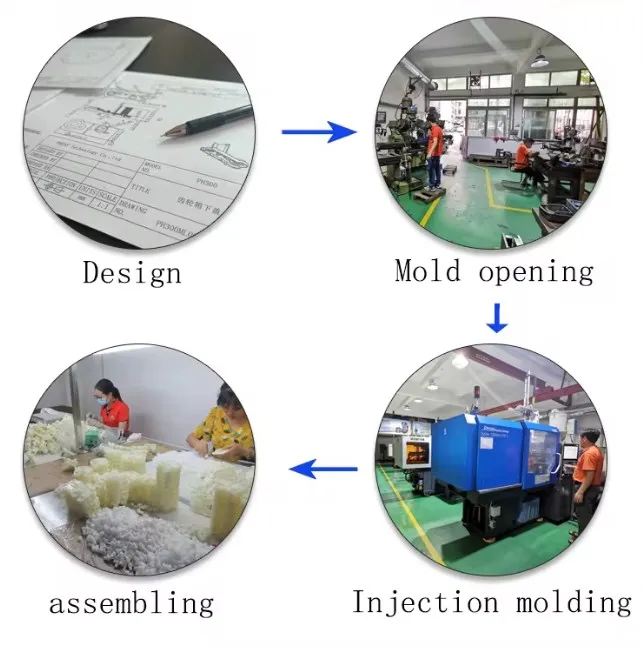
At our company, we specialize in the design and production of high-quality plastic helical gears. Our products are made from the best materials and are designed to meet the specific requirements of different applications.
Below are some reasons why you should choose our products:
- High-quality products: Our products are of the highest quality and meet the required quality standards.
- Cost-effectiveness: Our products provide the best cost-effectiveness for your application.
- Customization: We can customize our products to meet your specific application requirements.
- Reliable after-sales service: We offer reliable after-sales service to ensure that our customers get the best value for their money.
- Expertise: Our team of experts has years of experience in the production of plastic helical gears and can offer expert advice and solutions to meet your requirements.
Q&A
Q1. What are the advantages of using plastic helical gears over metal gears?
A1. Plastic helical gears have several advantages over metal gears, including lower noise levels, higher efficiency, lighter weight, and corrosion resistance. They are also generally cheaper to produce than metal gears.
Q2. What are the common types of plastic helical gears?
A2. The most common types of plastic helical gears include straight helical gears, spiral helical gears, and double helical gears.
Q3. What factors should be considered when choosing the right plastic helical gear?
A3. Factors to consider when choosing the right plastic helical gear include specific application requirements, material selection, design optimization, supplier and after-sales service, cost-effectiveness, and quality control.
Q4. What are some applications of plastic helical gears?
A4. Plastic helical gears are used in various industries, including home appliances, agricultural machinery, automotive industry, medical equipment, and office equipment.
Q5. Why should I choose your company’s products?
A5. Our products are of the highest quality, cost-effective, customizable, and backed by reliable after-sales service. We also have a team of experts with years of experience in the production of plastic helical gears and can offer expert advice and solutions to meet your requirements.
Author: Dream